In short
LiftMaster, Chamberlain, Craftsman and Genie openers are all repaired in Easton. Note the brand and model number on the motor unit, then call: most faults are a gear, a board, a capacitor or the sensors, and the price is given before work starts.
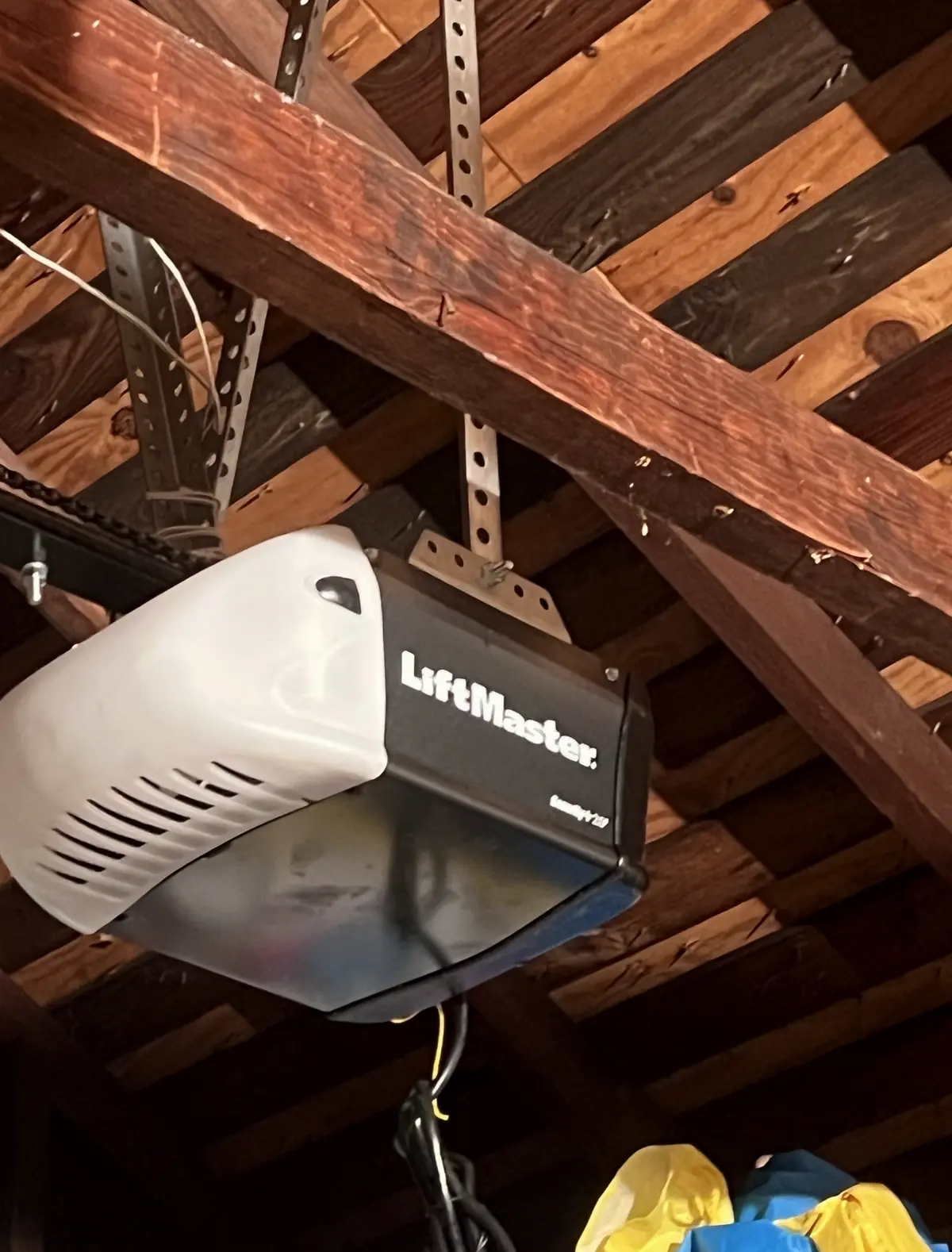
Openers we see in Easton
Easton is farms, reservoirs and houses on one to three acres. In Upper Easton, barns and equipment sheds have large doors, and a residential opener is not the right tool for them; the operator has to suit the door's size and how often it cycles. Houses there and along the reservoir roads have two- and three-bay garages with LiftMaster and Chamberlain units, and long outages after storms make battery backup worthwhile. In Lower Easton, on one-acre lots, 1960s to 1980s colonials and ranches have builder chain drives and Genie units that have earned their retirement. Dust from farm work, damp from the reservoirs and mice in the wiring all shorten the life of wall controls and sensors. With no stores to speak of in town, owners appreciate a repair that is done in one visit.
Identify the opener first
Most openers in American garages carry one of three names, and knowing which one you have speeds things up.
- Chamberlain: bought at a store and often installed by the homeowner. Chain or belt drive.
- LiftMaster: from the same manufacturer, fitted by installers. Includes the wall-mount models that sit beside the door instead of on the ceiling.
- Genie: a different maker. Older Genie units often use a screw drive: a long threaded rod instead of a chain or belt.
Read the model number off the motor unit's label and have it ready when you call.
Typical problems with LiftMaster, Chamberlain and Genie
- Worn drive gear. The most familiar failure on older chain-drive LiftMaster, Chamberlain and Craftsman units. The motor spins, the door does not move.
- Logic board. Lights flash, the unit clicks, or it works only some of the time. Lightning and power surges are the usual cause.
- Remotes and keypads. A remote from the wrong generation will not pair. The Learn button's color, or Genie's code type, decides which ones work.
- Screw-drive wear. On older Genie openers, a worn carriage lets the door jerk or stop.
- Sensors. Each brand has its own, and they are not interchangeable.
What the technician does
The visit starts with the door, not the opener. With the opener disconnected, the door should lift by hand and stay put halfway. If it doesn't, the springs are the real problem, and a new opener would only wear out fast. Then the opener is tested: power, board, gear, travel limits, force settings and sensors.
Parts are matched to the brand and model. When a repair doesn't make sense, for example on a unit with no safety sensors or with parts that are discontinued, you hear that plainly, with the options for a replacement and the price before anything is done.
Brand names are used here only to describe the equipment being repaired. HIC and the technicians in its partner network are independent and are not affiliated with, authorized by or endorsed by Chamberlain Group, LiftMaster, Craftsman or Genie.
Around Easton
- Aspetuck: The historic district near the Aspetuck River, with older houses and outbuildings.
- Reservoir roads: Homes near the Aspetuck, Hemlock and Easton reservoirs, where damp air is hard on wood doors and hardware.
See the full Easton service area.